General Optics provides a comprehensive range of precision lenses, including spherical, aspherical, cylindrical, and collimation lenses. These products are engineered for focusing, beam shaping, and imaging across semiconductor, display, biomedical, defense, and laser applications.
Optical Lens Manufacturing Limits and Application
| Category | Size Range | Applications |
|---|---|---|
| Spherical Lenses | Ø2 – Ø300 mm, Thickness 1–80 mm | Focusing, collimation, imaging |
| Aspherical Lenses | Ø2 – Ø300 mm | Aberration correction, compact systems |
| Cylindrical Lenses | Ø2 – Ø300 mm, Length ≤ 300 mm | Line focusing, beam shaping, spectroscopy |
| Collimation Lenses | Ø2 – Ø50 mm, Focal 4–100 mm | Laser diodes, fiber coupling, sensing systems |
Lens Types
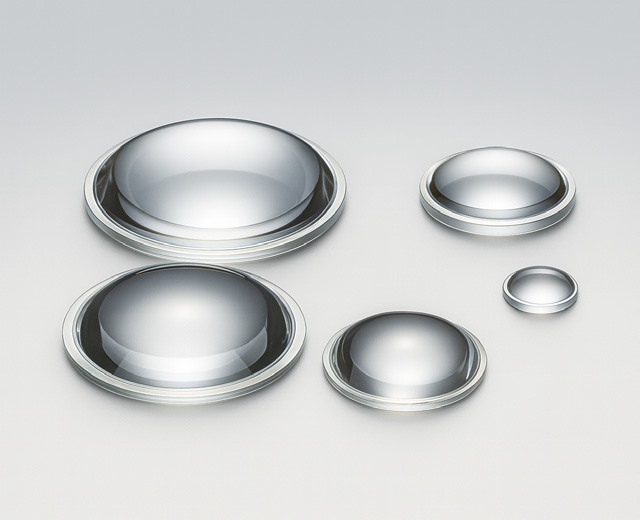
- Spherical Lenses: Plano-Convex, Bi-Convex, Plano-Concave, Bi-Concave, Meniscus
- Aspherical Lenses: Aberration correction, compact design, high-performance imaging
- Cylindrical Lenses: Beam shaping in one axis, line focusing, spectroscopy
- Collimation Lenses: Convert divergent beams into parallel beams, ideal for diode lasers, fiber optics, and sensing modulesStandard
Materials & Coatings
- Substrates: BK7, Fused Silica, CaF₂, Sapphire, ZnSe, Ge
- Coatings: AR (UV–IR, 193 nm–14 μm), HR, Broadband AR, DLC protective coatings
Key Features
- Dimensions: Ø2 mm – Ø300 mm (collimation lenses Ø2–50 mm)
- Focal Length: ±2 mm – ±1000 mm (collimation lenses 4–100 mm)
- Surface Accuracy: λ/4 – λ/10 @ 633 nm
- Surface Quality: 10-5 to 40-20 (depending on lens type)
- Capability_250920_영문1
- Divergence (collimation lenses): <1 mrad
General Optics Advantage
- End-to-end manufacturing: design → machining → coating → inspection
- Large-format production (up to Ø2050 mm substrates)
- DUV to IR coating expertise with High LIDT and DLC options
- Proven reliability in semiconductor, display, defense, and medical industries
Spherical Lenses
Spherical lenses are precision polished elements used for beam focusing, collimation, and imaging. General Optics manufactures PCX/BCX and PCV/BCV types in a wide range of substrates with high surface quality and broadband coating options.
Types
- PCX / BCX (Plano-Convex / Bi-Convex) – focusing & collimation
- PCV / BCV (Plano-Concave / Bi-Concave) – beam expansion & divergence control
- Meniscus (Positive/Negative) – aberration balancing for compact systems
Materials & Coatings
- Materials: BK7 / Fused Silica / CaF₂ / Sapphire / ZnSe (IR)
- Coatings: VIS/NIR AR (e.g., 400–700 nm, 650–1050 nm), UV AR (193–355 nm), IR AR (3–5 μm, 8–12 μm), HR/Custom on request
General Optics Advantage
- Tight tolerances and matched pairs; custom focal lengths
- DUV–IR coating in-house, high-durability AR/DLC option
- Large-format capability and OEM assemblies
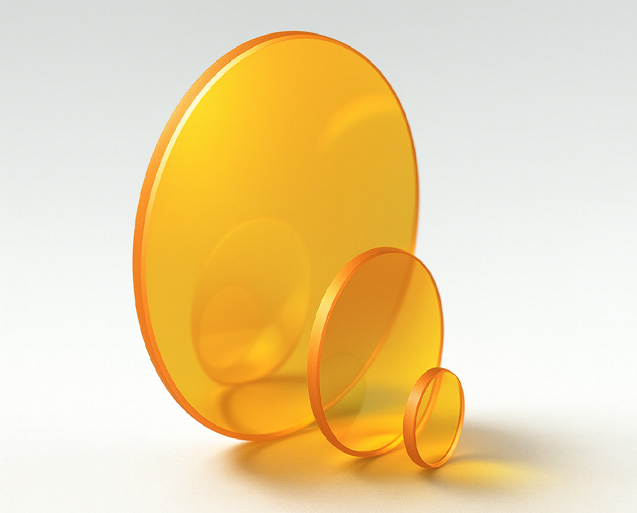
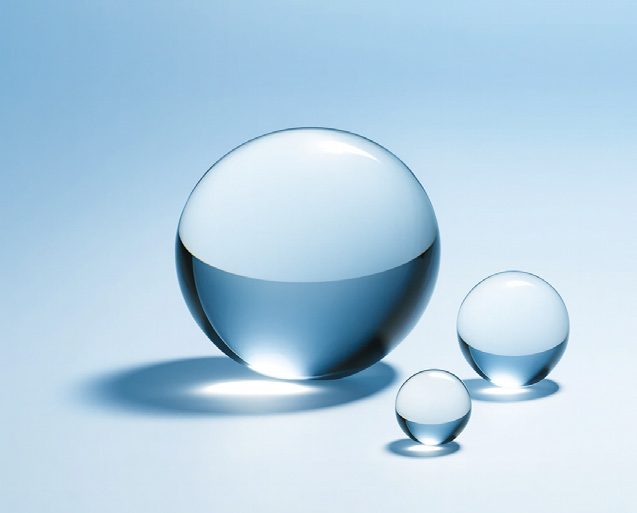
Wide Variety of Substrates
- Materials: BK7, Fused Silica, CaF₂, MgF₂, Ge, ZnS, ZnSe, Others
- Standard & Customized Coating Options: AR, HR, Low Loss, High Damage Threshold
Key Specifications
- Dimension: 2 mm – 300 mm
- Thickness: 1 mm – 80 mm
- Focal Length: ±2 mm ~ ±1000 mm
- Surface Accuracy: λ/4 ~ λ/10 @ 633 nm (BK7 & Fused Silica)
- Surface Quality: 10-5, 20-10
- Coating: AR, HR, Low Loss, High LIDT available
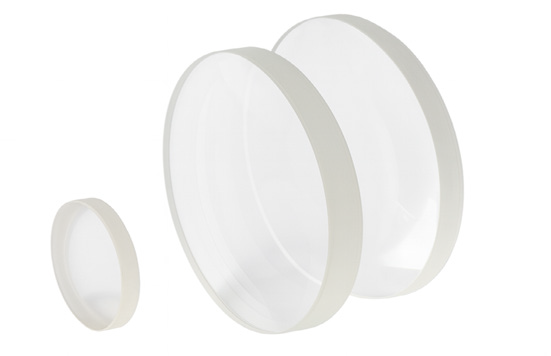
- Provides uniform focusing and imaging with
simple optical geometry. - Cost-effective solution for a wide range of
imaging and laser applications.
Spherical Lens
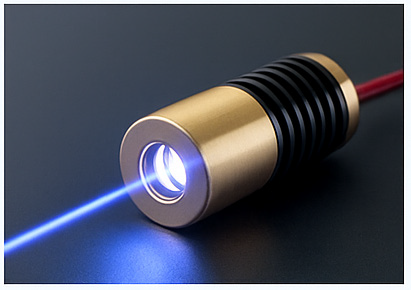
Laser Collimation / Focusing
- In-house coatings from DUV (193nm) to IR(14um), including durable AR and Protective DLC options
Aspherical Lenses
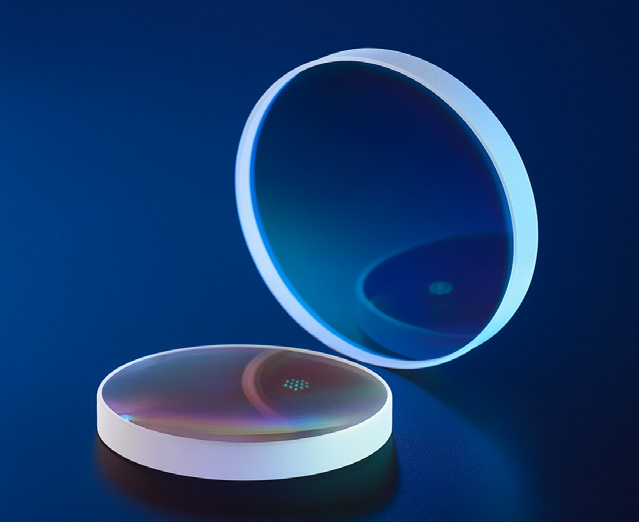
Aspherical lenses minimize spherical aberration and improve optical performance compared to standard spherical lenses.
They allow compact designs, fewer elements, and higher image quality.
Key Features
- Aberration correction with fewer elements
- Available in plano-aspheric, bi-aspheric, and cylindrical variants
- Materials: BK7, fused silica, CaF₂, ZnSe (for IR)
- Coatings: UV, VIS, NIR, IR AR; HR on request
Applications
- Imaging systems
- Laser collimation
- Illumination optics
- Medical instruments
General Optics Advantage
- Precision grinding and polishing, diamond turning for IR
- In-house metrology ensures form accuracy < 0.5 μm
- Custom large-diameter aspheres up to Ø300 mm
Wide Variety of Substrates
- Materials: Optical Glass, Fused Silica, CaF₂, BK7, and other infrared materials
- Coating Options: AR, HR, Low Loss, High Damage Threshold
Key Specifications
- Dimension: 2 mm – 300 mm
- Thickness: 1 mm – 80 mm
- Surface Accuracy: λ/4 ~ λ/10 @ 633 nm
- Surface Quality: 10-5, 20-10
- Aspheric Surface Form Tolerance: up to ±0.5 μm
- Materials: UV Grade Fused Silica, Optical Glass, CaF₂, Ge, ZnS, ZnSe, Others
- Coating: AR, HR, Low Loss, High LIDT available
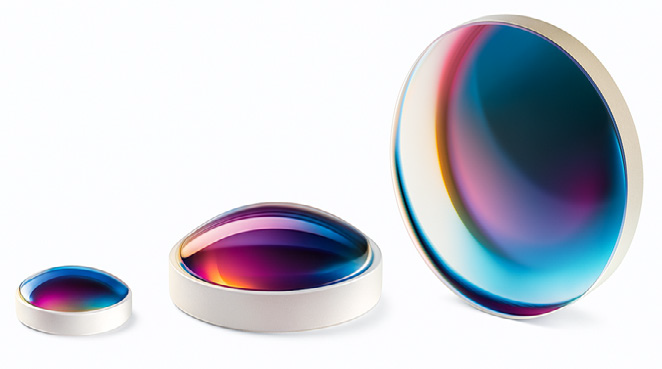
- Reduces spherical aberration and enhances
- image quality with fewer elements.
- Enables compact, lightweight optical
designs for advanced imaging systems.
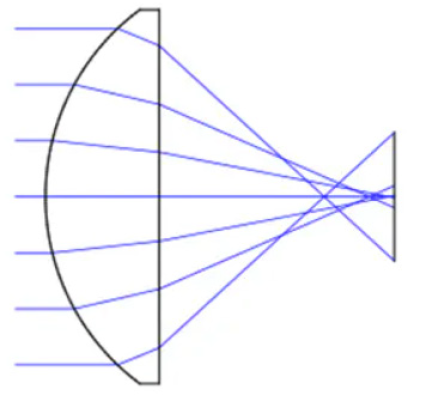
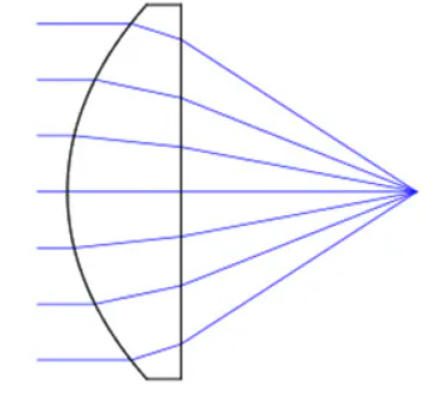
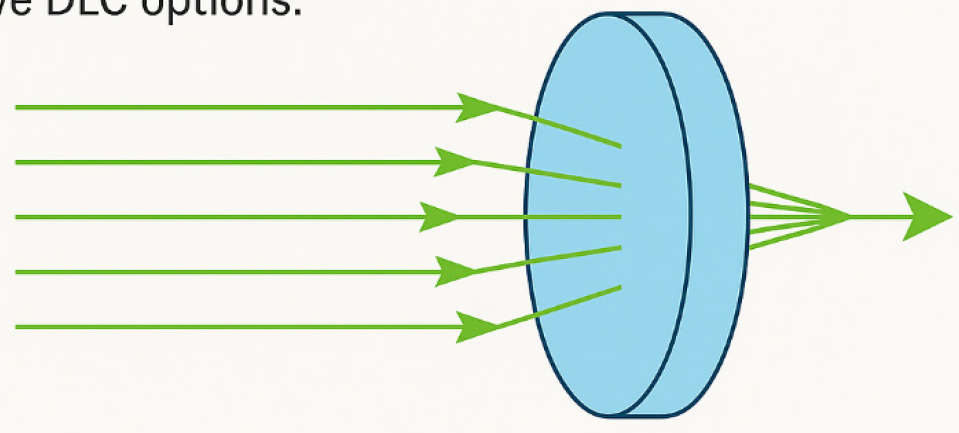
Spherical lenses introduce spherical aberration, causing peripheral and central rays to focus at different points along the optical axis.
Aspherical lenses, by contrast, correct this aberration, ensuring all rays converge precisely at a single focal point.
Cylindrical Lenses
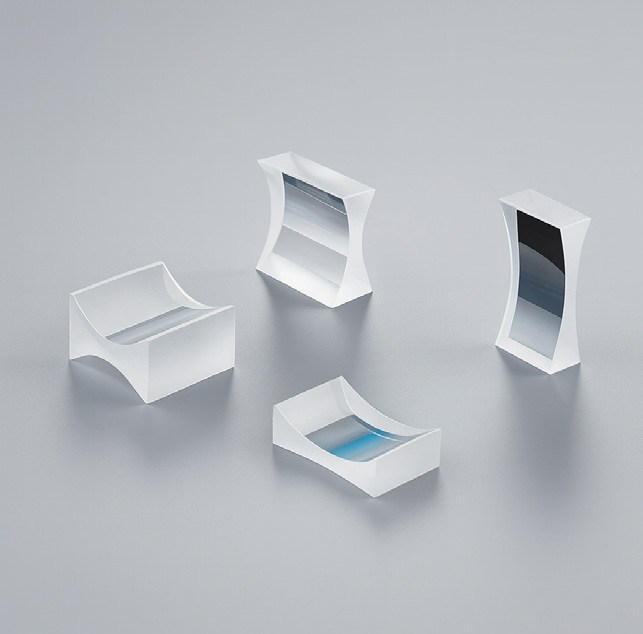
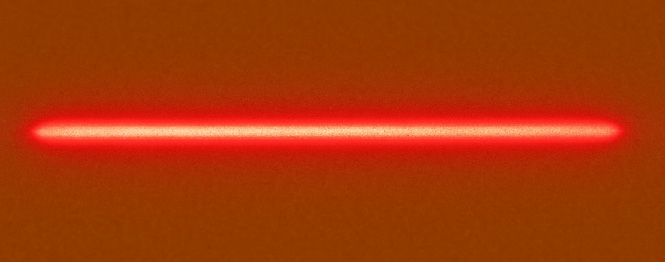
Cylindrical lenses focus or expand light in a single axis, ideal for line generation, beam shaping, and laser scanning applications.
Types
- Plano-Convex Cylindrical (focuses to a line)
- Plano-Concave Cylindrical (expands/diverges a line beam)
- Bi-Convex / Bi-Concave Cylindrical
- Custom crossed cylindrical for astigmatism correction
Materials & Coatings
- Materials: BK7, fused silica, CaF₂, ZnSe (IR)
- Coatings: VIS AR, NIR AR, UV AR, IR AR (3–5 μm, 8–12 μm)
Applications
- Laser line generation
- Laser diode collimation
- Spectroscopy setups
- Medical laser systems
General Optics Advantage
- Precision grinding and polishing of long rectangular optics
- Lengths up to 300 mm available
- High-accuracy surface form for demanding laser systems
Wide Variety of Substrates
- Materials: Fused Silica, CaF₂, MgF₂, BK7, ZnSe, SF11, Others
- Coating Options: AR, HR, Low Loss, High Damage Threshold
Key Specifications
- Dimension: 2 mm – 300 mm
- Thickness: 1 mm – 80 mm
- Focal Length: ±2 mm ~ ±1000 mm
- Surface Accuracy: λ/4 ~ λ/10 @ 633 nm
- Surface Quality: 10-5, 20-10
- Coating: AR, HR, Low Loss, High LIDT available
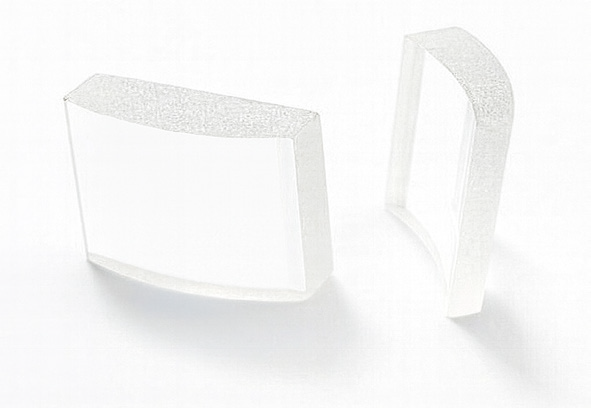
- Shapes and expands light in one axis for laser and imaging systems.
- Ideal for line generation, beam shaping, and scanning applications.
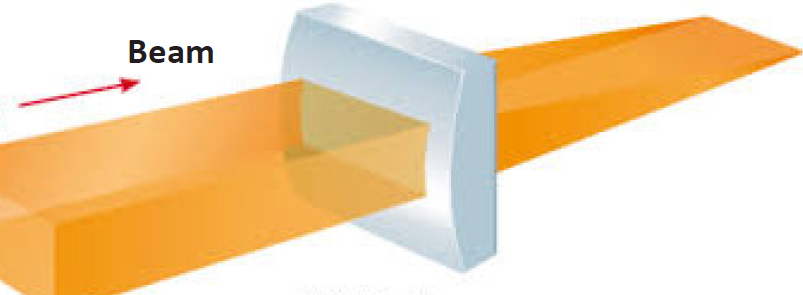
Unlike spherical lenses that converge light in both axes, cylindrical lenses control light in one direction only, making them ideal for applications such as laser line generation, diode collimation, and spectroscopy.
Collimation Lenses
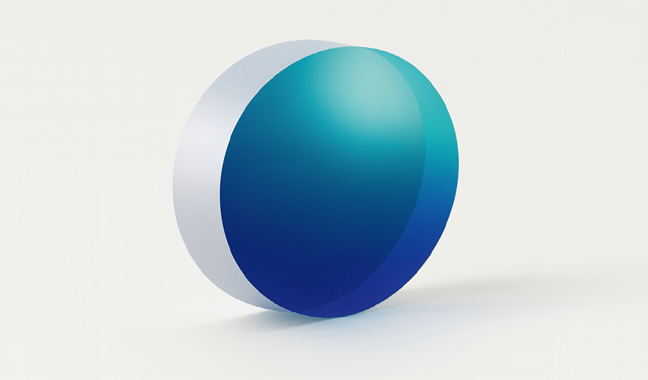
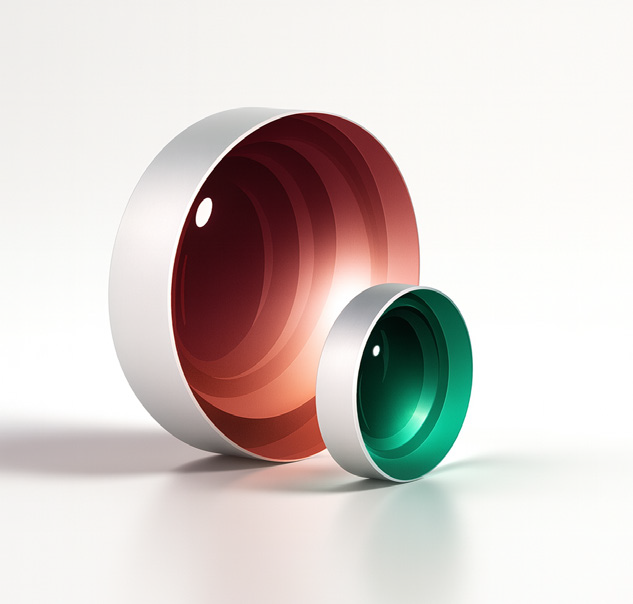
Collimation lenses convert divergent beams into parallel beams, ensuring high beam quality over long distances. They are widely used in laser diodes, fiber coupling, and sensing applications.
Key Features
- Designed for fiber output and laser diode collimation
- Low divergence, minimized aberrations
- Available in molded glass, precision-polished, and GRIN designs
Materials & Coatings
- Materials: BK7, fused silica, CaF₂
- Coatings: AR (UV, VIS, NIR), DLC protective coatings on request
Applications
- Laser diode collimation
- Fiber coupling
- Medical and sensing systems
- Compact optical modules
General Optics Advantage
- High precision centration for stable beam direction
- In-house AR coating from DUV to IR
- Custom assemblies with fiber connectors or mounts
Wide Variety of Substrates
- Materials: BK7, Fused Silica, CaF₂, ZnSe
- Coating Options: AR (UV, VIS, NIR, IR), DLC, HR
Key Specifications
- Dimension: 2 mm – 50 mm
- Thickness: 1 mm – 25 mm
- Focal Length: 4 mm – 100 mm (custom available)
- Divergence: < 1 mrad (typical)
- Surface Accuracy: λ/4 ~ λ/10 @ 633 nm
- Surface Quality: 40-20 (typ.), 20-10 available
- Coating: AR (193 nm – 14 μm), DLC, HR
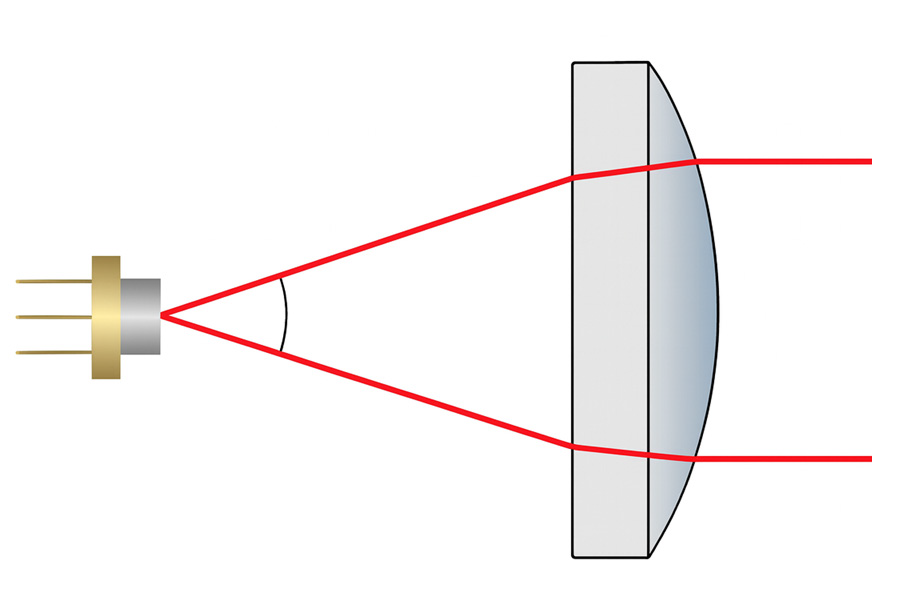
- Converts divergent beams into parallel
- beams
- Ideal for laser diodes, fiber coupling, and
sensing applications
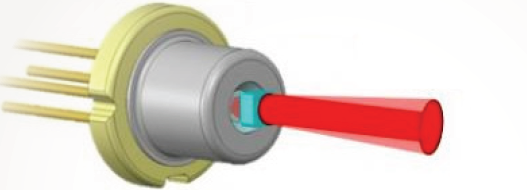
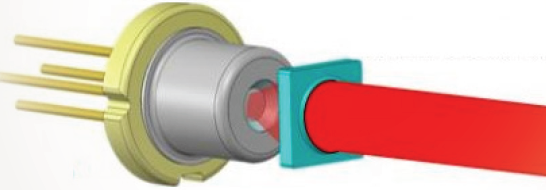
Beam Collimation Effect
The image compares light before and after collimation. Without a collimation lens, the beam diverges and loses focus; after collimation, it becomes parallel and uniform, ensuring stable propagation for laser and fiber applications.